Juvenile arrests for property crimes in 2000 were the lowest in at least three decades
As with violent crime, the FBI assesses trends in the volume of property crimes by monitoring four offenses that are consistently reported by law enforcement agencies nationwide and are pervasive in all geographical areas of the country. These four crimes, which form the Property Crime Index, are burglary, larceny-theft, motor vehicle theft, and arson.
For the period from 1988 through 1994, during which juvenile violent crime arrests increased substantially, juvenile property crime arrest rates remained relatively constant. After this long period of relative stability, juvenile property crime arrests began to fall. Between 1994 and 2000, the juvenile Property Crime Index arrest rate dropped 37%, to its lowest level since at least the 1960s. Specifically, juvenile burglary arrest rates declined throughout the 1980s and 1990s, the juvenile larceny-theft arrest rate was at its lowest level in 20 years, and juvenile motor vehicle theft and arson arrest rates were near their 20-year lows.
|
The increases in robbery and murder arrest rates between 1980 and 1994 were a juvenile and young adult phenomenon, while increases in aggravated assault arrest rates were common across all age groups 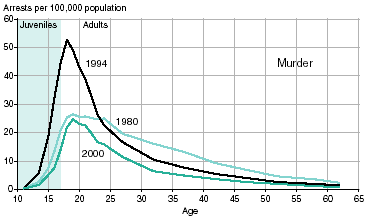
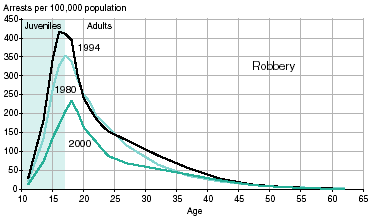
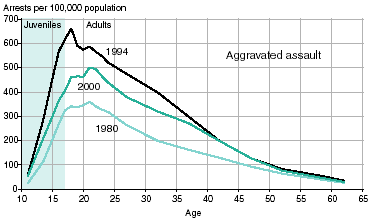
Data source: Analysis of arrest data from the FBI and population data from the U.S. Bureau of the Census. [See data source note for detail.] |
| Previous | Contents | Next |

|
|
| Juvenile Arrests 2000 | |